Thinking about building a home in Tarboro but not sure how the financing works? You’re not alone. Construction loans look different from a traditional mortgage, and local rules can affect your budget and schedule. In this guide, you’ll learn the loan options, how draws work, what lenders verify, and what to watch for in Tarboro and Edgecombe County. Let’s dive in.
Construction loan options
Construction loans help you finance a new build or major renovation. The best fit depends on your project, budget, and lender options.
- Construction-to-permanent (one-time close): One closing covers the build and then converts to a permanent mortgage when the home is complete. You simplify costs and avoid re-qualifying at the end.
- Construction-only (two-close): A short-term construction loan that you refinance or pay off with a separate permanent mortgage later. Some buyers choose this to compare permanent loan terms later.
- Renovation programs: Options like FHA 203(k) or conventional renovation products can fund significant improvements or structural changes.
- USDA and VA options: For eligible borrowers and areas, USDA and VA programs can support single-close construction. Availability varies by lender and property location.
If you already own a lot, your loan can often include the land’s value. If you are buying a lot, the loan may fund the land purchase at closing.
How construction-to-perm loans work
From pre-approval to closing
A typical one-time-close loan follows a clear path:
- Pre-approval and finalized plans, specs, and budget.
- Underwriting based on your finances, builder qualifications, and an appraisal of the as-completed value.
- One closing funds the lot or initial costs and sets up a draw account for construction.
- Construction begins, and the lender releases funds in stages as work is inspected.
- You make interest-only payments during construction on the amount drawn.
- After final inspections and a certificate of occupancy, the loan converts to your permanent mortgage.
Draw schedules and inspections
Lenders release funds to the builder at milestones tied to your approved budget. Common stages include:
- Foundation complete
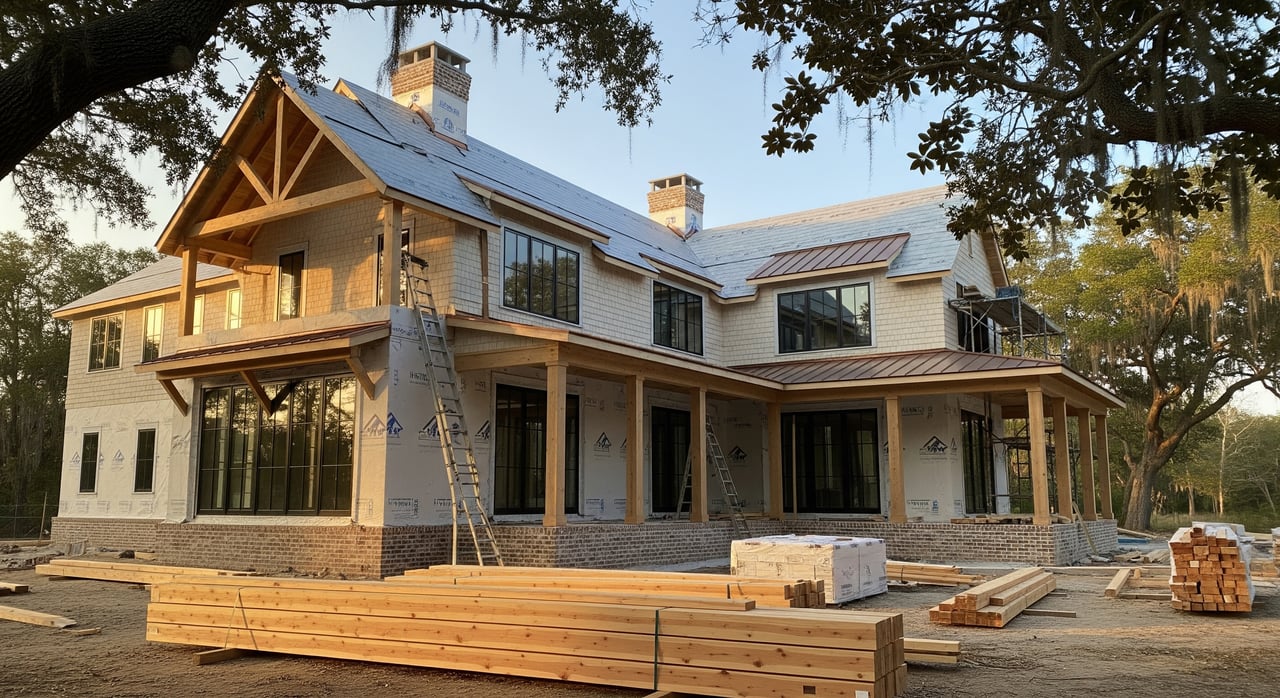
- Framing and roof complete
- Rough-in mechanicals, plumbing, electrical, HVAC
- Insulation and drywall
- Interior finishes and exterior site work
- Final completion and certificate of occupancy
Expect inspections before each draw. Lenders may hold a small retainage until final completion to help ensure punch-list items are finished.
Interest during the build and conversion
During construction, payments are typically interest-only on the amount disbursed. Once your home is complete, the loan converts into a standard amortizing mortgage per your loan agreement. One-time-close loans lock in terms up front, while two-close loans set permanent terms when you refinance.
Appraisal based on finished value
Construction loans rely on an as-completed appraisal. The appraiser reviews your plans and specs, then compares to similar finished homes in the area to estimate value once built.
How underwriting differs from a resale
Construction financing adds extra verification beyond a standard purchase:
- Detailed budget: Line-item costs, allowances, and contingency are required.
- Builder vetting: License where required, insurance, experience, and references.
- Contract review: Scope, schedule, payment terms, change-order rules, and warranties.
- Loan-to-cost and loan-to-value: Lenders look at both total project cost and the appraised finished value.
- Reserves and contingency: Many lenders require higher reserves and a contingency fund to cover overruns.
- Permits and plans: Evidence of permits and complete plans before certain draws.
- Title and lot checks: Clear title, easements, zoning, and any HOA rules if the lot is included.
- Frequent inspections: Draws tied to progress and sign-offs.
You may need stronger credit, more reserves, and more equity than with a resale purchase.
Tarboro and Edgecombe: local must-knows
Local factors can affect your budget, timing, and approval.
- Permits and inspections: New builds and major renovations require permits in Tarboro and Edgecombe County. Confirm whether your address is under the town or county for permitting. Plan for multiple municipal inspections at key stages.
- Flood risk near the Tar River: Some areas are in Special Flood Hazard Areas. If your lot is in a flood zone, lenders require flood insurance, and your foundation design and costs may change. An elevation certificate may also be needed.
- USDA rural eligibility: Parts of Edgecombe County may qualify for USDA single-close construction programs. Eligibility depends on property location and borrower status.
- NC contractor licensing: North Carolina requires general contractor licensing above certain project values. Verify your builder’s license and insurance.
- Site and utilities: Setbacks, septic vs. sewer, and well requirements affect design and cost. Confirm tap fees, utility extensions, and erosion control early.
- Appraisal comps: In areas with fewer new-home comps, appraisers and lenders may be conservative on the finished value. Detailed specs and realistic budgets help.
Step-by-step: plan, fund, build
Pre-project planning (3–8+ weeks)
- Get pre-approved with a lender experienced in construction-to-perm loans.
- Select and vet your builder for license, insurance, references, and draw process experience.
- Finalize plans, specs, and a line-item budget with contingency.
- Confirm land status, title, and any easements.
- Check flood maps, soils, septic or sewer, and any special site costs.
Lending and contracting (2–6+ weeks)
- Submit your full loan package: finances, plans, contract, builder credentials, and draw schedule.
- Order the as-completed appraisal.
- Align on draw stages, retainage, and inspection protocol.
- Sign construction loan documents and confirm change-order and lien waiver procedures in your contract.
Construction phase (4–12+ months)
- Close the loan and fund the lot or initial mobilization.
- Pull permits and complete municipal inspections per schedule.
- Lender releases draws after progress inspections and lien waivers.
- Track budget, schedule, and change orders; protect your contingency.
- Complete final inspections and obtain the certificate of occupancy.
Conversion and wrap-up
- One-time-close: loan converts automatically to your permanent mortgage.
- Two-close: refinance or close on the permanent loan.
- Collect final lien waivers and release retainage.
Risks and how to manage them
- Cost overruns: Use a realistic budget, include 5–15% contingency, and require written change orders.
- Permitting delays: Apply early and build buffer time into the schedule.
- Flood or site surprises: Do soils testing, flood checks, and site evaluations upfront.
- Builder default: Choose a reputable, licensed builder; consider performance protections and retainage.
- Mechanic’s liens: Require lien waivers with each draw and confirm subs are paid.
- Low appraisal: Provide complete specs and market data; be ready with extra equity if needed.
Is a construction loan right for you?
If you want a custom build or a major renovation in Tarboro, a construction loan can be a smart path. You’ll trade a bit more paperwork and oversight for the ability to design your home and control quality. The key is getting the team aligned: a lender who does construction-to-perm loans, a vetted builder, and a clear budget and draw schedule.
When you’re ready to map the process to a lot or a specific plan, our team can help you compare options, coordinate with local builders, and plan your timeline. Start the conversation with Foote Real Estate Group.
FAQs
What is a construction-to-permanent loan in Tarboro?
- It’s a single loan that funds your build and then converts to a standard mortgage after final inspections and a certificate of occupancy.
How do draw schedules work for Tarboro builds?
- The lender releases funds at milestones like foundation, framing, rough-ins, drywall, finishes, and final, with inspections before each draw.
Do I make payments during construction?
- Yes, you typically make interest-only payments on the amount disbursed; full principal-and-interest payments begin after conversion.
What extra documents do lenders require for construction loans?
- Expect detailed plans and specs, a line-item budget, builder license and insurance, a signed contract, and permits before certain draws.
How does flood risk affect financing near the Tar River?
- If the property is in a flood zone, lenders require flood insurance and may need an elevation certificate; foundation design and costs can change.
Can I use a construction loan if I already own a lot?
- Yes, many programs allow you to roll your lot’s value or payoff into the construction loan as part of total project costs.
Are USDA or VA construction loans available in Edgecombe County?
- Some areas may qualify for USDA single-close construction, and VA has construction options; availability depends on location and borrower eligibility.